WILL THE STATUE OF LIBERTY GO BACK TO FRANCE?
By Troy Mathews
The Statue of Liberty (whose official name is “Liberty Enlightening the World”) is a colossal neoclassical sculpture on Liberty Island in New York Harbor (which is part of New York City). The idea for the statue was conceived in 1865, when the French historian and abolitionist Édouard de Laboulaye proposed a monument to commemorate the upcoming centennial of U.S. independence (in 1876), the perseverance of American democracy, and the liberation of the nation's slaves as a result of the Civil War (1861-1865).
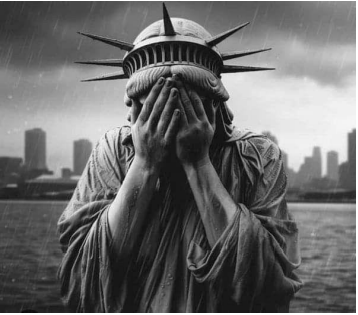
But though the Statue of Liberty has long been considered a symbol of the United States, the results of the first two months of President Donald Trump’s administration motivated Raphaël Glucksmann, a French Member of European Parliament, to demand that the United States return the famous monument to France. Glucksmann called on Americans to send the gifted statue back, stating that because of Trump's embrace of dictators, his generalized attacks on civil rights, and his policies of unconstitutional detention and mass deportation, the U.S. no longer adheres to the values of liberty and democracy embodied in the monument.
According to Glucksmann, "We’re going to say to the Americans who have chosen to side with the tyrants, to the Americans who have fired researchers for demanding scientific freedom: Give us back the Statue of Liberty. It was our gift to you, but apparently you despise [desprezam] it. So it will be just fine here at home."
Officially presented to the United States by France in Paris in 1880, the statue was unveiled [revelada] in New York Harbor in 1886 to mark (10 years late) the 1776-1876 centennial anniversary of the Declaration of Independence. It has long been a symbol of the American dream for immigrants arriving in New York Harbor seeking a better life in the United States. Inscribed at the base of the statue are the powerful words by the poet Emma Lazarus, herself a descendant of Jewish immigrants: "Give me your tired, your poor, your huddled masses yearning to breathe free [as multidões apinhadas que anseiam por respirar em liberdade].”
Nevertheless, too many of Donald Trump's policies and activities have cast [lançaram] a shadow on this beacon [farol] of welcome and liberty – at least that’s what Raphaël Glucksmann seems to believe.
Adapted from the Meidas Touch News website, March 17, 2025
The information in the passage most likely supports which of the following?
Lê-se em: “Glucksmann called on Americans to send the gifted statue back, stating that because of Trump's embrace of dictators, his generalized attacks on civil rights, and his policies of unconstitutional detention and mass deportation, the U.S. no longer adheres to the values of liberty and democracy embodiein the monument.”